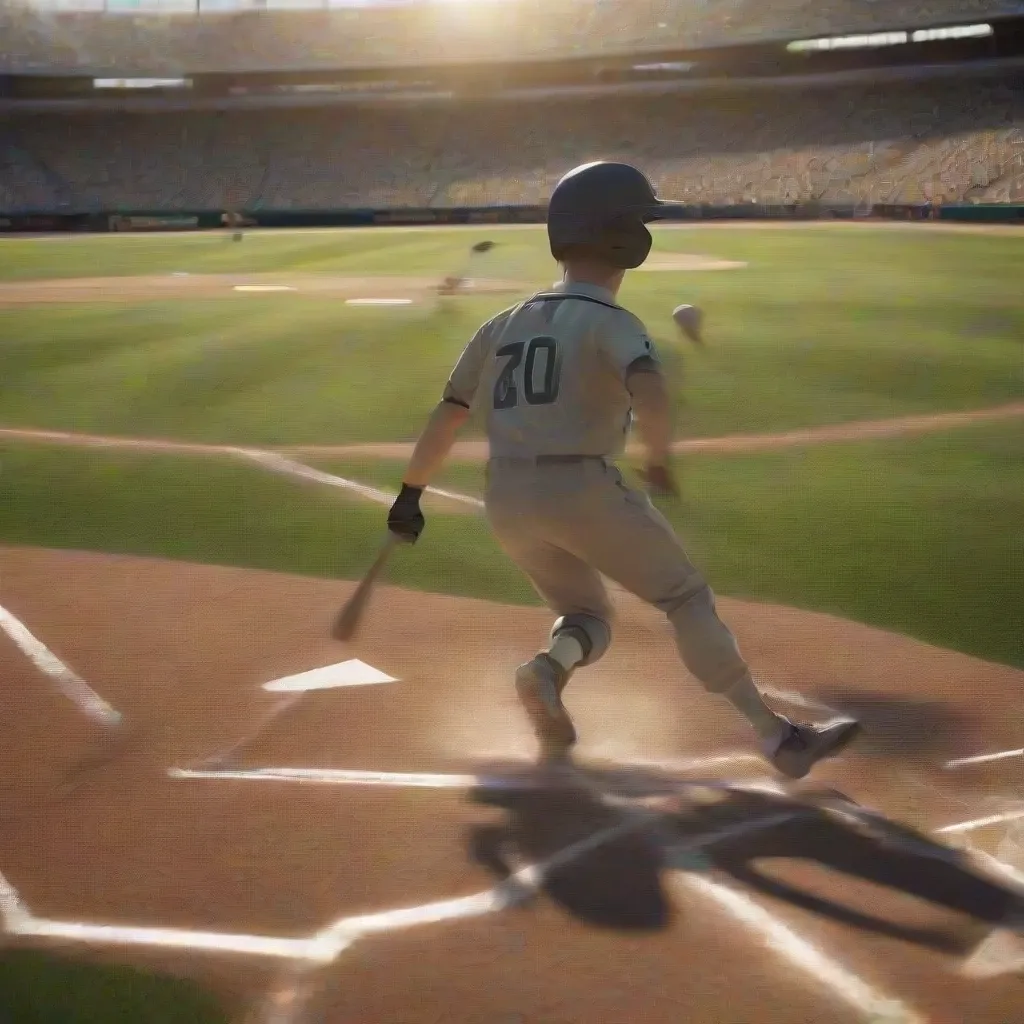
In the grand tapestry of Major League Baseball, certain threads seem to fade with time. The stolen base, once a kingmaker, now plays a more niche role. The complete game, a testament to pitching endurance, is a rare sight. And then there’s the double – that satisfying crack of the bat sending a ball screaming into the gap, a baserunner sprinting, and the scoreboard ticking upward.
But lately, the frequency of doubles feels…different. Has anyone else noticed fewer balls bouncing off the outfield wall? Perhaps it’s the rise of launch angle and the obsession with the home run. Maybe defensive shifts have choked off those valuable alleyways. Whatever the reason, the numbers don’t lie: doubles are becoming scarcer in the modern game. This fact is more than just a statistical quirk; it’s a shift in offensive philosophy with real consequences. Doubles drive in runs, extend innings, and put immense pressure on opposing pitchers. Their decline impacts team strategy, player development, and the very excitement of the game.
Let’s step up to the plate and delve into why the two-bagger is becoming an endangered species. We’ll explore the factors contributing to its demise, analyze the impact on offensive performance, and, most importantly, see what can be done to revive this vital part of baseball.
The Declining Double: A Statistical Overview
The crack of the bat sending a ball screaming into the gap, a runner hustling to second, the satisfying slide just ahead of the throw – the double. Once a staple of baseball, this exciting play has been quietly fading from the game. A look at the numbers reveals a clear downward trend, painting a picture of the declining double in Major League Baseball.
Over the past decade, the frequency of doubles has demonstrably decreased. Data from reputable sources like Baseball-Reference and Statcast show a consistent dip in doubles per game and doubles per at-bat. Consider a simple metric: doubles per plate appearance. Analyzing this rate stat year-by-year, a distinct negative trajectory emerges. Visual representations, like charts illustrating this decline, further underscore the data’s impact.
To truly appreciate the significance, compare current double statistics to historical averages. The contrast is striking. While the game has evolved, the decline of the double stands out, especially when juxtaposed with the increase in other offensive categories. For example, home run rates have surged during the same period that doubles have waned, suggesting a shift in offensive strategy and player approach. This statistical divergence highlights that the disappearing double is not merely a natural fluctuation but a noticeable and potentially concerning trend in MLB.

Why the Gap is Getting Smaller: Factors Contributing to the Decline
The landscape of Major League Baseball has undergone a massive transformation, and one of the most noticeable changes is the decreasing number of doubles. Once a staple of offensive production, two-baggers are becoming increasingly rare. Several factors have converged to create this decline, impacting everything from hitting approaches to defensive alignments and even the dimensions of the ballparks themselves.
The Home Run or Nothing Mentality
There’s been a dramatic shift in hitting philosophy across MLB. The modern game increasingly rewards the long ball, with teams prioritizing players who can launch balls out of the park. Players are coached to swing for the fences, focusing on launch angle and exit velocity, often at the expense of simply getting on base. The focus on power has inadvertently devalued other forms of offensive production. There is nothing wrong with a player trying to hit a home run, but it’s important to focus on just getting on base too.
Defensive Strategies
Defensive shifts have become a pervasive strategy in today’s game, significantly impacting the frequency of doubles. Teams analyze hitter tendencies and deploy infielders and outfielders in unconventional alignments to cover areas where balls are most likely to be hit. For example, a pull-heavy hitter might face an extreme shift with three infielders on one side of the diamond. This defensive approach effectively plugs up potential gaps, turning would-be doubles into routine groundouts. Deeper outfield positioning also cuts down on balls rattling around for extra bases.
Ballpark Specifications
The unique dimensions of each ballpark strongly influence offensive output, and this is evident in the doubles decline. Certain parks are notoriously hitter-friendly, with shorter fences and smaller dimensions that favor power hitters. Others are pitcher’s parks, featuring deeper fences and larger outfields that make it more difficult to hit for extra bases. Some players thrive in specific environments. A line-drive hitter might find more success in a spacious ballpark with ample gaps, while a power hitter could take advantage of a smaller field to rack up home runs. The dimensions significantly impact the likelihood of doubles being hit.
The Art of the Double: Skills and Strategies for Hitting
Doubles. In baseball, they’re more than just a base hit; they represent a strategic advantage, a display of hitting prowess, and a crucial element in offensive firepower. Transforming singles hitters into double-producing machines requires a dedicated approach, focusing on specific hitting skills and strategies. The key isn’t always about brute strength; it’s about intelligent hitting, exploiting gaps, and maximizing bat control to send those line drives screaming into the outfield.
Using the Whole Field
A true hitter isn’t limited to pulling the ball. They command the entire field. A complete approach entails understanding how to attack pitches in various zones. Inside pitch? Turn on it and pull it with authority. Outer half? Drive it to the opposite field with precision. This versatility forces pitchers to respect all areas of the plate, creating more favorable hitting counts and opportunities to exploit gaps for doubles. Becoming a ‘full field’ hitter opens up the possibilities.
Hitting the Ball Consistently
Chasing home runs leads to inconsistency and often, weak fly balls. The double hitter prioritizes consistent, hard contact. The goal is a line drive – a ball that screams off the bat, clears the infield, and lands before the outfielders can react. Forget trying to get under the ball; the mission is to create backspin and carry, sending the ball on a trajectory that maximizes distance within the confines of the field. Focus less on clearing the fence and more on splitting the gaps.
The Importance of Velocity
Making hard contact, regardless of location, is paramount. High exit velocity, achieved through strength and core stability, transforms routine hits into potential doubles. While spin rate and carry contribute, the initial impact – the sheer force imparted on the ball – dictates its trajectory and distance. A hitter’s ability to generate bat speed through proper mechanics and physical conditioning directly correlates to their ability to hit ground-rule doubles and drive balls into the gaps with authority.
Strategic Deployment: How Teams Can Maximize Doubles
In Major League Baseball, a team’s ability to consistently produce doubles is a significant indicator of offensive prowess. It boils down to meticulously crafted team strategy. It’s not just about individual talent; it’s about how a team constructs its roster, optimizes its lineup, and implements its coaching philosophies to create a doubles-producing machine. Prioritizing players known for exceptional bat control and the ability to find the gaps in the outfield is paramount. The strategic placement of these players in the batting order is crucial, maximizing opportunities to drive in runs and extend innings. Effective coaching methods play a vital role in teaching players the art of hitting for doubles, emphasizing techniques that promote hard contact and efficient baserunning.
Teams that leverage team analytics gain a competitive edge. By identifying patterns and tendencies, teams can tailor coaching strategies and game plans to optimize double production. It’s about using data to inform decisions and refine player development programs. Mastering doubles is not accident, is the reflection of a well-thought-out and executed team strategy, turning potential into tangible results on the field.
Stacking Potential
Smart teams think of roster construction as an art of stacking potential. It means you don’t just gather talent, but you strategically assemble players whose hitting styles complement each other. The goal is to build a lineup where hitters can capitalize on opportunities to drive the ball into the gaps. When looking to stack hitters, you also want to place them strategically within the lineup to maximize their potential for success. When you want a consistent lineup, you have to have versatile hitters at the core. Roster flexibility becomes the name of the game.
Coaching Availability
Consider a team with a high-profile hitting coach. But the secret sauce isn’t just their expertise; it’s their ability to communicate the same techniques throughout the entire roster. If the hitting coach can’t get his vision out to the players in a clear way, then the team is setup to fail. Consistent communication equals consistency. The hitting coach should be able to communicate the same message throughout the entire team to maximize their potential. The field specialist should be able to maximize each hitter in the most efficient way to get the most potential.

Beyond the Box Score: Advanced Metrics for Evaluating Doubles
In the modern game of baseball, simply counting doubles isn’t enough. Teams are digging deeper, utilizing advanced metrics to truly understand a player’s ability to hit two-baggers. This involves going beyond traditional stats and venturing into the world of data analysis, powered by tools like Statcast.
Metrics such as exit velocity and launch angle are crucial. Exit velocity measures the speed of the ball as it comes off the bat, while launch angle refers to the vertical angle at which the ball leaves the bat. Combining these two metrics provides a clearer picture of the quality of contact. A high exit velocity combined with an optimal launch angle dramatically increases the chances of a ball becoming a double, finding gaps in the outfield or bouncing perfectly off the wall.
This data feeds into the concept of “expected doubles.” Expected doubles uses historical Statcast data to predict how likely a batted ball is to become a double based on its exit velocity, launch angle, and even factors such as the ballpark dimensions. Teams then use the “expected doubles” to evaluate players, identifying those who may be exceeding or underperforming expectations based on the quality of their contact.
For example, a team like the Tampa Bay Rays, known for their innovative use of analytics, might target a player with a high expected doubles rate but a lower actual doubles total. This could indicate that the player has been unlucky and is poised for a breakout. They could then use this data to make strategic decisions such as trades or player development plans.
The Future of the Double: Predictions and Possibilities
The future of the double in MLB is a fascinating subject, ripe with possibilities and dependent on the ever-shifting sands of baseball evolution. Rule changes, hitting trends, and even technological advancements all play a role in determining whether the two-bagger will experience a resurgence or continue its slow decline.
One major area of potential change lies in defensive strategies. The prevalence of extreme defensive shifts has undoubtedly contributed to the decrease in doubles. Should MLB further restrict or even eliminate shifts, we could witness a boost in doubles as more batted balls find their way through the infield and into the gaps. Imagine a world where hitters are incentivized to spray the ball to all fields, rather than simply trying to muscle everything over the fence. The result? More doubles, more excitement.
Beyond rule changes, hitting philosophies are also in constant flux. Will the emphasis on launch angle and exit velocity eventually give way to a more balanced approach that prioritizes hitting line drives and utilizing the entire field? If so, doubles could become a more valuable offensive weapon. Furthermore, advancements in training methods and data analysis could help hitters optimize their swings for doubles production, identifying the ideal launch angles and exit velocities for hitting balls into the gaps.
Ultimately, the future of the double in MLB is uncertain. But it is clear that the game’s evolution is the key. Whether through rule changes, strategic adjustments, or technological breakthroughs, the double could be poised for a comeback, adding another layer of excitement and strategic depth to America’s pastime, or slowly fade into obscurity.
Conclusion
In summation, the diminishing prevalence of doubles in Major League Baseball stems from a confluence of factors: the ascendancy of home run-centric strategies, defensive shifts that swallow up would-be gap hits, and evolving player development philosophies. However, dismissing the double as a relic of baseball’s past would be a grave error. It remains an incredibly valuable offensive weapon, capable of igniting rallies, manufacturing runs, and shifting momentum in an instant.
Having worked with numerous players throughout my career, I’ve consistently emphasized the importance of hitting for doubles. It’s a skill that unlocks additional offensive potential and forces opposing pitchers and defenses to respect the hitter’s ability to drive the ball with authority. Doubles also provide more opportunities to score, advancing runners further around the bases and applying pressure on the opposition.
I encourage players and coaches alike to re-emphasize the importance of hitting for doubles. By honing the ability to drive the ball into the gaps, players can unlock a more well-rounded offensive skillset. I also encourage them to make adjustments during their careers to find what works for each of them. In doing so, they’ll become more valuable assets to their teams, contributing to a more dynamic and exciting brand of baseball. The double isn’t dead; it’s merely waiting for its resurgence.