Ever witnessed a soccer match where the ball kisses the goalpost, sending shivers down the spines of players and fans alike? That’s goalpost grazing – a near miss that’s far more significant than it seems. Think back to pivotal moments in soccer history, those games decided by a hair’s breadth. Often, the difference between victory and defeat lies in the subtle art of controlling where the ball almost goes.
Goalpost grazing isn’t just about luck; it is about accuracy and cleverness. It’s an underestimated skill that can unlock tactical advantages you never thought possible. This article serves as your guide to mastering this elusive technique. You’d be surprised how effective of a weapon it becomes with proper training.
Defining the “Goalpost Graze”
The “goalpost graze” isn’t just about missing the net; it’s a specific kind of miss. Think of it as a near-post shot, executed with intention and surgical precision. It’s the art of getting incredibly close to scoring, grazing the goalpost, without actually hitting the back of the net. It requires a nuanced understanding of spacing, angle, and power. The shooter isn’t just wildly hoping for the best; they’re consciously aiming to thread the needle.
A true goalpost graze is a controlled shot, a testament to skill and calculation. Forget about those flailing shots that sail errantly wide. A wild, uncontrolled attempt that happens to thump the post doesn’t qualify. We’re talking about deliberate placement. This technique needs focus and a keen eye; anything else is simply luck.
The Tactical Advantage of Near Misses
While a goal is the ultimate objective, a near miss in soccer holds a surprising tactical advantage. These close calls ripple through the opposing team, planting seeds of doubt and unease, particularly within the goalkeeper’s mind. Each near miss subtly alters the goalkeeper’s positioning, often pulling them further from the goal center in anticipation of the next strike. This marginal shift can be exploited.
Beyond the psychological impact, near misses frequently generate rebound opportunities. A ball striking the goalpost or crossbar rarely dies; instead, it ricochets back into play, injecting chaos into the box. Alert forwards can capitalize on the scramble, converting a near miss into a genuine scoring chance. Furthermore, near misses can inadvertently unlock passing lanes that were previously obscured. The defensive line, focused on the trajectory of the initial shot, may momentarily lose their shape, creating gaps for a clever through ball.
The true value of a near miss lies in its ability to stretch the opposition’s defensive capabilities. Goalkeepers, defenders, and the overall defensive line are forced to cover more ground and make split-second decisions under immense pressure. This heightened state of alert inevitably leads to mistakes, opening the door for future scoring opportunities. A near miss isn’t a failure; it’s a calculated pressure, a strategic maneuver designed to weaken the opponent’s resolve and force them into errors.
Technical Drills to Master Near-Post Accuracy
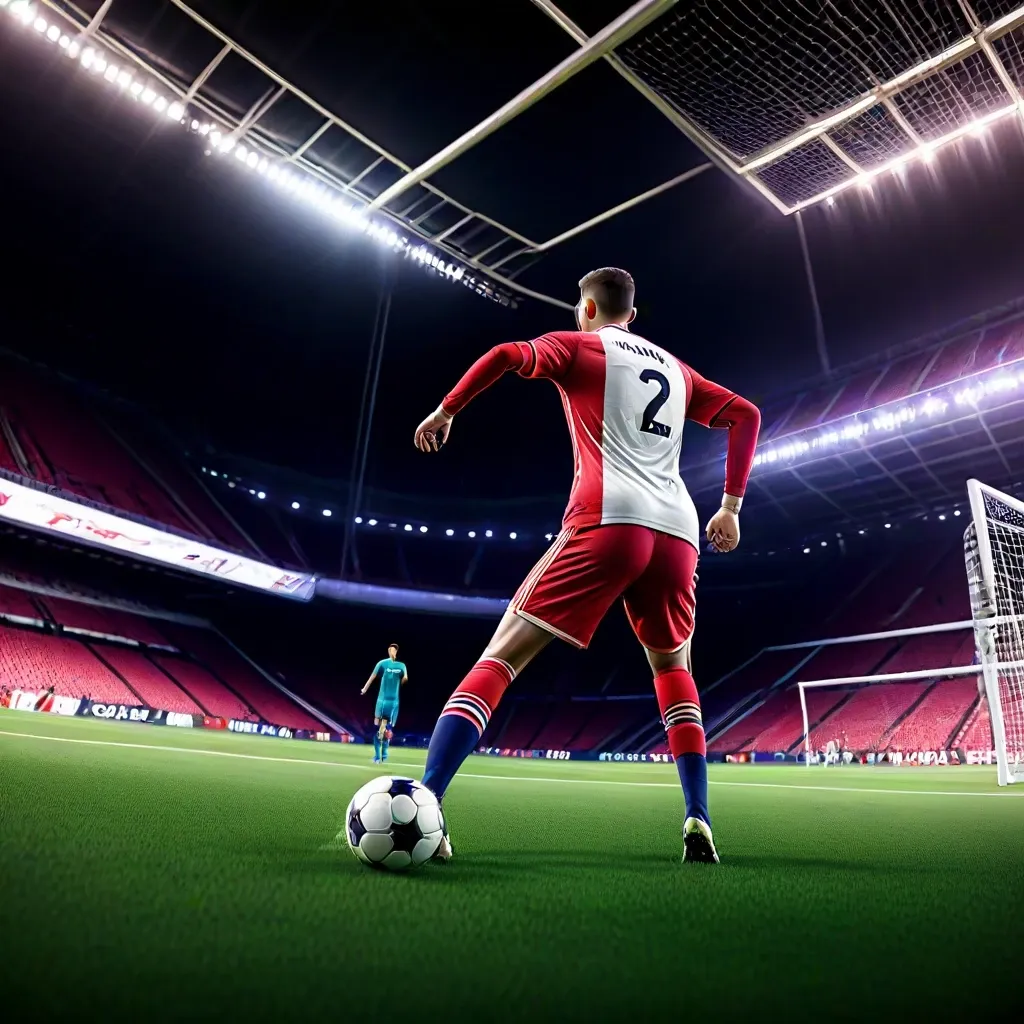
Mastering near-post accuracy transforms a player’s offensive capabilities. The following drills provide a structured pathway to developing the pinpoint precision needed to consistently find the back of the net. Repetition is paramount; consistently executing these drills will hardwire the necessary muscle memory.
Static Shooting: Building a Foundation
Begin with static shooting to ingrain consistent form. Position yourself approximately 10-12 yards from the goal, directly in front of the near post. Focus intently on a specific point just inside the post. Plant your non-kicking foot alongside the ball, use the inside of your foot or laces striking through the center for power and placement. Emphasize a smooth, controlled follow-through toward your target. Perform 3 sets of 10 repetitions, concentrating on hitting the same spot with each shot. This drill will help establish a solid foundation for near-post accuracy, building crucial muscle memory to call upon later.
Angle Adjustments: Variety is Key
Once static shooting feels comfortable, progress to angle adjustments. Position yourself at varying angles around the top of the penalty box, always targeting the same spot on the near post. From a 45-degree angle, focus on opening the hips to create space for the shot. Consider using the inside of your foot to bend the ball around a potential defender. Increase difficulty with sharper angles, using more power and bending the ball to compensate. Perform 3 sets of 8 repetitions from various angles. This adjustment trains your body to adapt in different game situations to maintain accuracy.
Dynamic Shooting: Simulating Game Pressure
Introduce dynamism by incorporating short dribbling runs before each shot. Start further away from the goal, dribble towards the box, and then unleash a near-post shot. You can also have a partner call out commands – “left,” “right,” “center” – dictating your starting position and adding a reactive element. This prepares you to react faster in a real game and not just be static. This drill bridges the gap between static practice and the chaos of a match, improving reaction time and decision-making under pressure. Aim for 3 sets of 6 repetitions, alternating starting points and dribbling styles.
Partner Drills: Adding Defensive Pressure
Simulate game-like defensive pressure by having a partner act as a defender. The partner should apply light pressure, attempting to close you down as you approach the ball. This added pressure will test your composure and force you to make quicker decisions. Focus on maintaining your shooting technique while under duress. Adjust power and placement as needed to compensate for the defender’s presence. This drill will help you maintain accuracy even when faced with a physical challenge, bolstering your confidence in high-pressure situations. Complete 3 sets of 5 repetitions, varying defensive intensity with each set.
The Mental Game: Visualization and Decision-Making
Success in the attacking third isn’t solely about physical prowess; it’s significantly influenced by the mental game. Mental preparation, encompassing visualization, focus, and rapid decision-making, separates good players from exceptional ones.
Visualization techniques are powerful tools for enhancing performance. By mentally rehearsing scenarios – picturing the pass, the defender’s position, the goalie’s stance, and the ball hitting the back of the net – players build confidence and condition their minds for success. This mental repetition translates to quicker reactions and more decisive actions on the field. Imagine yourself making that perfect through ball, feel the weight of the pass on your foot, see the receiver getting the ball and scoring. Feel it. Repeat it.
Maintaining focus under pressure is crucial. The attacking third is a high-stakes environment where every touch matters. Distractions, fatigue, and the roar of the crowd can all derail concentration. Techniques like deep breathing, positive self-talk, and pre-set mental cues can help anchor a player in the present moment and sharpen their focus. Narrow your focus on the ball, then on the opponent and the goal and let everything else disappear.
Decision-making in the attacking third often occurs in a split-second. The ability to quickly process information, assess options, and execute the right play is paramount. This requires a combination of innate aptitude, learned skills, and experience. By analyzing past games, studying opponents, and constantly challenging themselves in training, players can sharpen their decision-making abilities and react instinctively when the pressure is on.

Analyzing Pro Games: Case Studies of Success and Failure
Examining real-world examples from professional soccer provides valuable insights into the effectiveness of near-post strategies. By analyzing both successful and unsuccessful attempts, we can identify the key factors that contribute to positive or negative outcomes.
Case Study 1: A Textbook Near-Post Goal
In a recent Champions League match, a prime example of near-post success unfolded. A well-placed corner kick was delivered with pace and accuracy, targeting the near post. A forward, positioned strategically, made a decisive run, timing his jump perfectly to meet the ball with a glancing header. The speed and angle of the header directed the ball powerfully into the net before the keeper could react. This success resulted from precise delivery, astute player positioning, and impeccable timing.
Case Study 2: A Near-Post Failure
Contrastingly, consider a scenario from a major league game where a free-kick aimed at the near post went awry. The delivery lacked sufficient pace and height, allowing the defending team to easily clear the ball. The intended receiver was also poorly positioned, failing to create separation from his marker. Furthermore, there was a lack of supporting players to capitalize on a potential flick-on or rebound. This failure highlights the importance of delivery quality and effective player movement.
Case Study 3: The Graze That Created Opportunity
In a high-stakes international match, a corner kick delivered to the near post was initially unsuccessful. The attacker only managed to get a slight graze on the ball. Instead of resulting in a goal, the deflection wrong-footed the first line of defenders, and created chaos in the six-yard box. An alert teammate reacted quickest, pouncing on the loose ball to slot home a goal. This case study shows that even a seemingly unsuccessful near-post contact can still generate scoring chances with relentless pressure and awareness.
Advanced Strategies: Combining Technique and Tactics
Elevating goal-scoring prowess transcends individual skill; it requires seamlessly integrating precise near-post accuracy with a broader tactical understanding. Advanced strategies involve a multifaceted approach, leveraging teamwork and calculated maneuvers to amplify scoring opportunities.
Off-the-ball movement is crucial. It’s not just about having possession; it’s about intelligently positioning oneself to receive a pass in a dangerous area. Making runs that drag defenders out of position creates space for teammates. By manipulating the defensive line, gaps appear that can be exploited with a well-timed pass or a quick burst of speed.
Passing combinations dismantle even the most organized defenses. Short, sharp passes can unlock tight spaces, forcing the opposition to react and potentially make mistakes. Overlapping runs, give-and-go plays, and intricate triangular passing patterns create openings for a clear shot on goal. These combinations keep the defenders guessing and force them into uncomfortable situations, potentially disrupting their cohesion.
Set-piece strategies represent golden chances to capitalize on organized chaos. Whether it’s a free kick or a corner, a well-designed routine can lead to a goal. This involves not only precise delivery but also coordinated movement within the penalty area. Creating screens, making deceptive runs, and attacking the ball with determination are all essential elements of a successful set-piece strategy.
By mastering these advanced strategies and integrating them with near-post accuracy skills, players can significantly enhance their scoring capabilities and become a more potent threat in the attacking third. The key is to view goal-scoring not as an isolated act of individual brilliance, but as the culmination of collective effort and tactical execution.
Conclusion
Mastering the near-post shot is a game-changer for any soccer player looking to elevate their goal-scoring ability. From understanding the optimal angle and foot placement to developing the necessary power and precision, each element plays a crucial role in consistently beating the goalkeeper. Remember, the element of surprise is your ally; exploit the keeper’s blind spot and capitalize on swift, well-placed shots.
The journey to becoming a proficient near-post shooter demands consistent, focused practice. Dedicate time to refining your technique, honing your accuracy, and building the confidence to execute these shots under pressure. Soccer improvement requires dedication. Don’t underestimate the impact of mastering this often-overlooked skill. Get out on the field, put in the work, and watch your goal-scoring stats soar and make near post shot your invaluable asset.