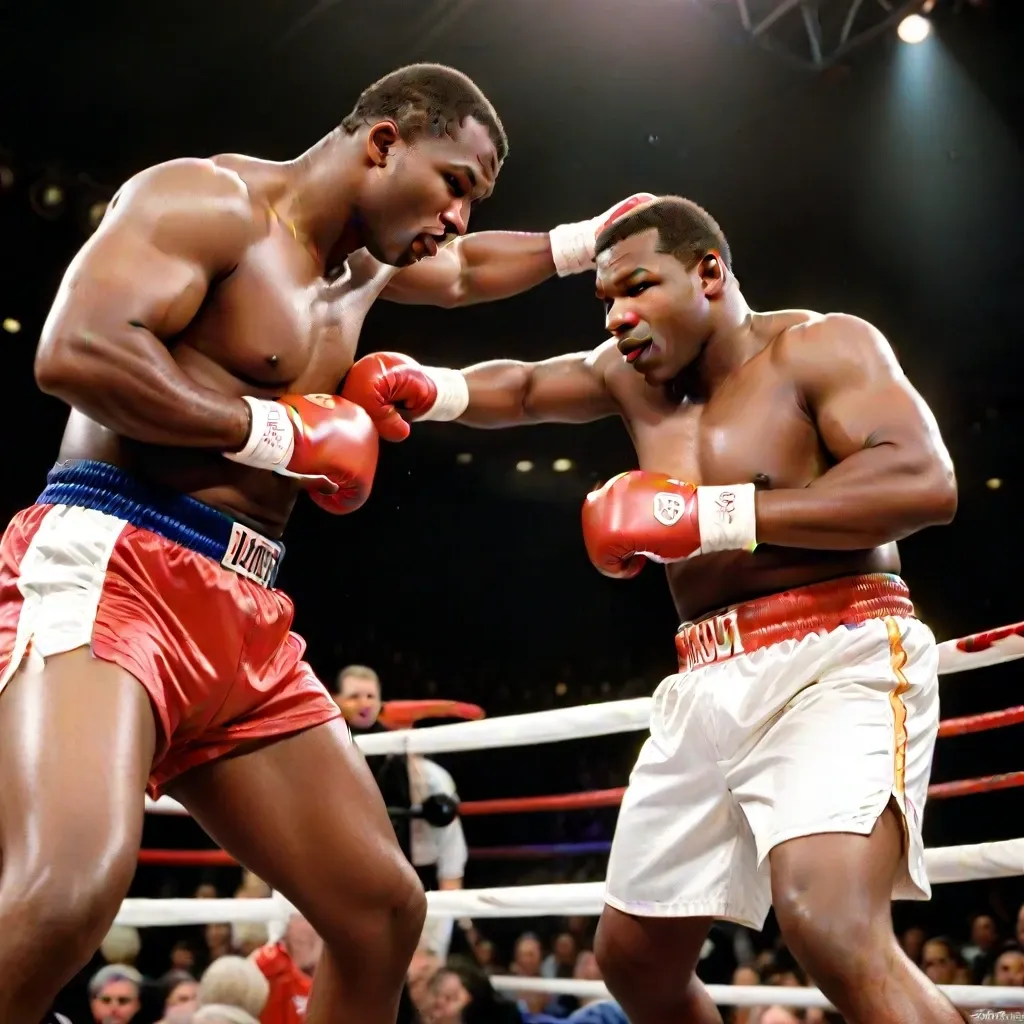
Imagine the roar of the crowd fading into stunned silence. The champion, once an invincible force, is on the canvas, defeated by an unlikely challenger. This is the electrifying essence of boxing upsets, moments etched forever in boxing history. Think of Buster Douglas’s shocking victory over Mike Tyson, a seismic event that redefined what was possible in the ring. These aren’t just wins; they’re underdog stories fueled by relentless training, strategic brilliance, and the unwavering belief in the face of overwhelming odds.
The beauty of boxing lies in its unpredictability; skill, tactics, and sheer willpower can converge in an instant to rewrite the script. And sometimes, it comes down to one perfectly timed punch such a powerful uppercut. This article explores the anatomy of boxing upsets, diving into the strategies, the mental fortitude, and the crucial role of techniques like the uppercut that can turn the tide of a fight. Join us as we unpack the components of unexpected victories and how they shape the narrative of boxing.
The Anatomy of an Upset
A boxing upset transcends mere victory against the odds. It’s a confluence of factors where the perceived underdog dismantles the favorite’s advantages, defying expectations and often reshaping careers. Understanding the anatomy of an upset requires dissecting the key elements at play.
Underestimation is a common thread. The favored fighter might underestimate their opponent’s skills, leading to lax preparation or a flawed game plan. This overconfidence creates an opening for the underdog to exploit. Game-plan effectiveness is paramount. An underdog with a well-crafted strategy, tailored to exploit the favorite’s weaknesses, drastically increases their chances. This could involve superior footwork to evade power punches, a relentless jab to disrupt rhythm, or a willingness to brawl and disrupt the favorite’s composure.
Luck, while a factor, is often overstated. A “lucky punch” might secure the knockout, but it’s often the culmination of sustained pressure and strategic positioning. True upsets are built on preparation, not pure chance. Bookmaker odds, fighter condition, and weight class dynamics all contribute to the upset equation. A fighter moving up in weight might be favored, but the underdog’s superior conditioning or ring generalship can negate the size advantage.
Therefore, an upset isn’t just about winning; it’s about strategically dismantling the established order. It’s when preparation meets opportunity, and the underdog seizes the moment with a blend of skill, strategy, and unwavering determination.

Case Studies: Legends of Unexpected Victory
Buster Douglas vs. Mike Tyson
The Tokyo Dome witnessed one of boxing’s most staggering upsets when Buster Douglas dethroned the seemingly invincible Mike Tyson in 1990. Tyson, a wrecking ball of destruction, entered the fight with a 37-0 record, a unified heavyweight title, and an aura of invincibility. Douglas, on the other hand, was a skilled but inconsistent fighter, grieving the recent loss of his mother, and was a 42-1 underdog. Few gave him a chance.
Douglas, however, arrived in Tokyo prepared to execute a game plan. He and his trainer, J.D. McCraken, knew Tyson liked a come forward fight and had a plan to counter him. Douglas maintained a disciplined jab, using his reach effectively to keep Tyson at bay. Beyond physical preparation, Douglas possessed a mental fortitude fueled by his mother’s memory. He weathered Tyson’s early onslaught, absorbing punishment and refusing to wilt.
The fight’s turning point arrived in the middle rounds. Douglas, having softened Tyson with consistent jabs and combinations, began to find a home for his right hand. In the eighth round, a brutal uppercut from Douglas snapped Tyson’s head back, visibly stunning the champion. Tyson’s equilibrium was visibly compromised. Then, in the tenth round, Douglas unleashed a devastating combination that sent Tyson crashing to the canvas. Tyson, fumbling for his mouthpiece, failed to beat the count. The world watched in disbelief as Buster Douglas was declared the new heavyweight champion.
Key Lesson: Mental fortitude, coupled with a well-executed strategy, can overcome even the most imposing physical advantages.
Muhammad Ali vs. Sonny Liston
In 1964, a young, flamboyant Cassius Clay, later known as Muhammad Ali, challenged the fearsome Sonny Liston for the heavyweight title. Liston was a menacing figure, a former convict with a granite chin and knockout power. He had destroyed Floyd Patterson twice, and was widely regarded as unbeatable. Clay, while fast and agile, was considered too inexperienced and too fragile to withstand Liston’s brutal style. The odds heavily favored Liston.
Ali, however, possessed a belief in his own abilities that bordered on audacity. He trained rigorously, focusing on speed, agility, and ring generalship. His camp understood that Ali couldn’t simply outmuscle Liston. Instead, Ali planned to use his superior footwork and hand speed to frustrate Liston, tiring him out and exploiting any openings. He taunted Liston relentlessly in the build-up, getting under his skin and disrupting his composure.
In the fight, Ali danced and moved, peppering Liston with jabs and refusing to stand still. Liston, frustrated and unable to land his power punches, grew increasingly desperate. Controversy swirled as Ali complained about burning eyes, possibly due to a substance on Liston’s gloves. Between the sixth and seventh rounds, Ali nearly quit, but his trainer, Angelo Dundee, pushed him back into the fight. Liston, battered and exhausted, remained on his stool at the start of the seventh round, unable to continue. Ali had shocked the world, proving that speed, skill, and unwavering self-belief could conquer even the most formidable opponent.
Key Lesson: Strategic brilliance and unwavering self-belief can dismantle seemingly insurmountable odds.
The Uppercut: An Underdog’s Secret Weapon
The boxing uppercut, a punch delivered in a rising arc, is more than just another strike; it’s a potential fight-changer. When executed correctly, it can disrupt an opponent’s balance, exploit openings in their guard, and dramatically shift the momentum of a bout. Its effectiveness lies in its surprise factor and the raw power it can generate.
The beauty of the uppercut is in its versatility. The delivery, its angle and the context can influence the delivery. It can be a short, compact shot aimed at the body or a longer, looping strike targeting the chin. Regardless of the variation, the uppercut’s upward trajectory makes it difficult to anticipate, allowing a fighter to penetrate defenses that might otherwise seem impenetrable.
Before launching an uppercut, consider these factors: height advantage (or disadvantage), the opponent’s guard (high or low), and their reach. Analyze if your opponent has a defensive stance that leaves the body exposed, or if they tend to leave their chin vulnerable when throwing punches. Keep in mind boxing axioms such as closing the distance, setting up the shot with jabs and angling correctly. By considering these variables, boxers can maximize the uppercut’s impact, turning it into a devastating weapon in their arsenal.

Spotting the Signs: Predicting the Improbable
Boxing is a sport where anything can happen, but some telltale signs can hint at a potential upset before the first bell even rings. Identifying these boxing upset factors could give fans and bettors a crucial edge.
Fighter Fitness: A fighter’s physical condition is paramount. Keep an eye out for signs of poor conditioning during weigh-ins or pre-fight interviews. Is the fighter struggling to make weight? Do they seem sluggish or lacking energy? Any dip in their physical prime compared to previous fights can be a red flag.
Mindset and Mental Preparation: Boxing is as much a mental game as it is a physical one. A fighter’s mental state can significantly impact performance. Has the fighter been dealing with personal issues? Do they seem distracted or lacking focus in interviews? A champion who is not mentally present is vulnerable. Furthermore, excessive trash talk or bravado can sometimes mask underlying insecurity.
Training Type and Camp Quality: The quality of a fighter’s training camp plays a vital role. Has the fighter made significant changes to their coaching staff or training regimen? Are they experimenting with new strategies or sparring partners? While change can sometimes be beneficial, it can also disrupt a fighter’s rhythm and familiarity. An upheaval during training camp, or a change in tactics, can sometimes be an indicator of a potential upset brewing.
By carefully considering these factors – fighter fitness, mindset, and training – one can better assess the likelihood of a boxing upset. Identifying a vulnerable favorite before a bout will make you think twice before putting your money on the line.
Training the Mindset: Preparing for Victory Against All Odds
Boxing is often perceived as a purely physical endeavor, a brutal ballet of jabs, hooks, and footwork. Yet, beneath the surface of sweat and raw power lies a critical, often overlooked component: the mental game. Mastering the mindset is not just about building confidence; it’s about forging an unshakeable belief in victory, even when the odds seem insurmountable.
The mental preparation for a fight begins long before the opening bell. During the grueling weeks of training camp, a fighter’s mind is constantly bombarded with doubts, fatigue, and the sheer monotony of the routine. This is where the winning mindset is truly forged. It’s about visualizing success, embracing the pain as a necessary step towards the goal, and relentlessly reinforcing the belief that victory is within reach. Boxing psychology teaches you to see every drop of sweat, every aching muscle, as an investment in your ultimate triumph.
Mental strategies are essential for maintaining focus and composure, especially when facing adversity in the ring. A fighter must learn to block out the noise, silence the inner critic, and stay present in the moment. Techniques like visualization and positive self-talk become powerful tools, helping to maintain a calm and centered state even under immense pressure. The ability to quickly adapt to changing circumstances, to stay focused on the game plan, and to maintain belief in one’s abilities is what separates champions from contenders.
Ultimately, the desire to win must transcend mere ambition; it must become an all-consuming fire that fuels every action. This unwavering will gives fighters the strength to push beyond their limits, to endure unimaginable pain, and to somehow find a way to triumph against near-impossible odds. When the body screams for mercy, it is the trained mind, the unyielding belief in victory, that pulls a fighter through, transforming potential defeat into glorious triumph. The mental game when mastered often wins the fight before the first punch is ever thrown.
Conclusion
Boxing upsets remind everyone that flawless victories are not guaranteed. Strategy, like understanding when to unleash a perfectly timed uppercut, is as crucial as brute strength. The mental game decides who will rise to the occasion. Analyzing boxing matches goes beyond who is the favorite; it’s about identifying weaknesses, studying techniques, and understanding the fighter’s state of mind.
The underdog’s story is powerful precisely because it defies expectations. It proves that with meticulous planning, skillful execution, and an unbreakable will, anything is achievable. The boxing ring, like life, often rewards the resilient spirit of those who dare to challenge the odds.